Saturday, January 30, 2016

Sounds of Science

This week in science we watched this video link of Jaime breaking the glass with his voice. Then we set to work to develop initial ideas and hypotheses around how this phenomenon is scientifically possible. Some of the initial ideas and wonderings were:

" I noticed he gets closer to the glass. I think he has to be close for the glass to break."
" We noticed that right before he sings he taps the glass. We think he had to get to a certain pitch."
" The glass only breaks in one big chunk it doesn't really shatter. I wonder why that happens?"
"I think it is important that the glass is a circle. Then the sound waves can circle around and around the glass more freely than if it was a square glass."
" I think the fact that it is a thin wine glass is important. I don't think the glass would break if it was thicker or shorter."
" Would it still break if there was water in the glass?"
Collecting data using the iPad decibel reader


Next we set out to test some of these hypotheses. We read about how our voices work and the parts that are involved with making sound. Some of our new vocabulary words were diaphram, windpipe, and vocal cords. Then we tested these parts with different types of sounds (whisper, hum, talk, yell) at different volumes. Our inquiry task helped us to determine that a higher volume/bigger sound increased the vibration. This is why we think Jaime had to be screaming to break the glass.

At the end of the week we wanted to test our hypothesis that the singer had to be close to the glass. To do this, we set up markers at different distances (in cm.) and used a decibel reader application on the iPads and a vacuum cleaner to test how distance affects volume. Then we went outside to see if our data was consistent in both locations. We set up markers at different distances (in meters) and used a bull horn to test how the dB reading changed at each marker. Once we were back inside we learned how to compile our data to create a line graph, find range, and determine the average. Our data and graphs clearly confirmed our hypothesis that as distance increases, volume decreases. We applied this to our phenomenon and now understand why he had to be so close to the glass in order for it to break.

Next week we will continue to investigate some of the ideas and wonderings that we still have. Stay tuned!

Counting down to the next reading. Cover your ears!
In math this week we finished up a unit on fractions and the students reflected on their progress by comparing their pre and post tests. The overall growth in student understanding was  fantastic and they felt quite proud of their new learning. This week we will begin a new unit in mathematics. During this unit your child will  compare multi-digit numbers and identify the value of the digits in such numbers, use the standard algorithms for addition and subtraction, measure length, distance, liquid volume, time, mass, and weight, and convert measurements from one unit to another within the same system (e.g., centimeters to meters but not centimeters to inches)


Sunday, January 24, 2016

Mosaic's Vermont History Museum

Thanks to all of those who were able to come and see our hard work at Mosaic's Vermont History Museum. The students all worked hard on their research, writing and creative presentations and they were thrilled to have such a supportive audience.  If you weren't able to join we tried our best to get around and snap a photo of as many of the "wax sculptures" as we could. Enjoy!

Click to play this Smilebox slideshow
Create your own slideshow - Powered by Smilebox
Slideshow design personalized with Smilebox

This week we will begin a new science unit around sound energy. We will be watching this piece of digital text where Jaime is able to shatter glass with only his voice. We will form hypotheses around this scientific phenomenon and conduct inquiry tasks and gather data to explain it over the next few weeks. We hope that you will engage in conversations around your own ideas about how this phenomenon works at home. 

Monday, January 18, 2016

Math and Mindset

This year in math we have been using our Pre/Post assessments to communicate with families about the mathematical concepts that students are engaged with.  Some have expressed concern over the scores that they see in the Pre-Assessment and we wanted to be clear about how these assessments help students and teachers to set goals. The pre-test is really just meant to show the teacher, student and parent what the child already knows in a unit we are about to start and helps everyone measure growth. It also help students set goals and be more aware of what they need to focus on during the unit; basically it makes them accountable for their learning. It also helps students focus on growth when they get a post-test back, rather than just a score. For us as teachers, it helps us think about what to slow down on and what to spend less time on when we look at particular trends and it also helps us think about who/what we need to provide support or enrichment on. It really is just an assessment tool given before the unit begins. 

This unit we have been engaged in some rigorous work around fractions. Students have been learning how to identify equivalent fractions and add fractions with common denominators. We have also been looking at models (egg cartons/geoboards) to look at improper fractions and mixed numbers. Most recently we have shifted our thinking from fractions to decimals. Fractions can be very abstract and attaching the concept to the idea of money was very motivating for students and it connected to the learning to something that was more concrete and relevant. 

We will be taking our Post Assessment next week and we hope that you will have the opportunity to look at both the Pre/Post test and use it as a way to celebrate how your student has grown and changed as a mathematician throughout the unit. We do not yet expect students to have mastery of fractions as a concept and this will provide them with the opportunity to set goals around these topics for future learning. 

We are looking forward to seeing you at the Mosaic Vermont History Museum on Thursday, January 21st from 8:00-8:45. Your young biographers have been researching, writing, and putting together a visual presentation and are excited to demonstrate their learning to a broader and very special audience. For those who are unable to attend we will be sure to attach some photos of our "exhibits" in next week's blog post. 


Saturday, January 9, 2016

Budding Biographers

We are always looking for authentic opportunities to integrate learning across the content areas in engaging ways. In fourth grade much of our interdisciplinary studies have been focused on  Vermont history and geography concepts. Over the past several weeks we have learned about mapping skills, studied the history of how Vermont became a state through role play and showed our understanding by storyboarding/cartooning. We also integrated writing into our units of study by creating a personalized google map of Vermont attractions and through writing opinion pieces and a personal poem about the beautiful state that we call home.

Our culminating project is a biography project on a famous Vermonter. Each student has chosen a Vermont figure whom they are curious about. Over the past week they have learned about the elements of the biography genre and how biographers use multiple sources to research their person of interest. Next week they will use their notes to draft, edit, revise and publish an informational writing piece about their person. Then they will present this information at our very own Mosaic Vermont History Museum. The “museum” will be open on the morning of Thursday, January 21 from 8:00-8:45.  Each classroom will be transformed into a museum room full of third and fourth grade “exhibits”. Come and let our hardworking students teach you more about your state!  

Next week we will be working on the visual literacy part of the project, where students will be creating a poster to display information. They will also brainstorm one or two props that would be appropriate to represent their person at their exhibit. This does not mean that they should be running out and buying materials. For example, if I was going to do a report on Ben Cohen of Ben and Jerry’s, I might have an ice cream scoop at my exhibit and don a tie-dye t-shirt. We are not looking for a full costume by any means!

The students have been working hard and have impressed us with the time management and teamwork in this project. We are looking forward to sharing their hard work with you all on the 21st.

Monday, December 14, 2015

Vermont's Victory


After lots of sneaking we managed to send Ms. M and Ms. Cota off with a complete surprise last week. We thank all of you for the contributions that you made to their teacher bags and our celebration snacks. There were laughs, tears, and many well wishes for these incredible future educators.

This week we wrapped up our unit of study on Vermont History and Geography. Over the past few weeks we have been simulating a reenactment of the struggle over this land between the NH Grants and The Yorkers. We were all quite angry with King George because of his greed and poor decision making and wrote strong opinion pieces to back up our positions. We were fortunate to take our new understanding (and heated feelings!) with us as we visited the Vermont History Museum in Montpelier. While here, we got to read more about some of the key players and see how history continued to unfold and be filled with many successes and challenges in the years to come. While at the museum the students got to act like curators and anthropologists as they looked through artifacts from an 1800's home that had burned down. Using these clues and their understanding of that time period, they were able to determine many things about the Wheelers and what early life in Vermont might have been like.

This week the students settled their dispute by writing their own Vermont Constitutions. We compared our declarations to the actual constitution that was written in 1777 and many of the same ideas were still just as important to our "student settlers." To assess their understanding of the many events that lead to the 14th state, the students created a comic strip storyboard highlighting the important events. You will see these on display in Mosaic soon.

In math we have been tackling concepts around equivalent fractions and looking at how to make sense of mixed numbers and improper fractions. To do this the students created fraction strips, a hands-on tool that allows them to compare the size of fractions and how they relate to each other. Soon we will use more hands-on activities to show how fractions and decimals are related.
Students should continue to practice their facts at home at least four days per week to build their fact fluency. Multiplication should be the focus at this point.

We are looking forward to a few special events coming up at school this week and next. The holiday concert, booster cell challenge "cell"abration, and our annual Mosaic Rad Day and Crafter Morning. Information has come home in your Friday folder this weekend with more details on these events.

For R.A.D. the students are asked to bring in some of their old 3rd/4th grade books for an exchange. Students can bring in as many or as few as they'd like. Everyone gets to "shop" for new to them books and go home for the break with new reading material. We also have mystery guest readers, buddy reading, digital reading, and more!

For the Craft Morning we are always looking for volunteers to run a craft. You would have three rotations of 8-10 students each. We also appreciate any healthy snack/beverages that you might be able to contribute that day.

Thank you so much for all that you do!


Sunday, November 22, 2015

Respectful Researchers


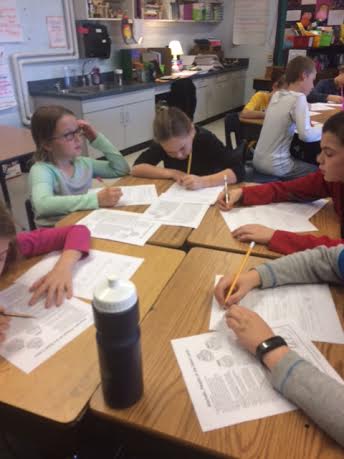
This week 4th graders researched a variety of topics on Vermont’s Native Abenaki history and culture. Early on in the week there were some minor snafus, but our accepting and flexible students were able to adjust and keep learning throughout the week, producing some stellar, informative writing to be proud of! Your student will be able to share the writing that they and their whole class did after the break once we attach the writing to the Abenaki style books that students created in art class. Students certainly enjoyed finding out about the Abenaki and sharing what they learned to help all of the 4th graders learn more in our reading and discussion of the text that they wrote on Thursday. I’m sure they would love to tell you, too! (If they haven’t already!)
12270420_10205677238790237_103849299_n.jpg
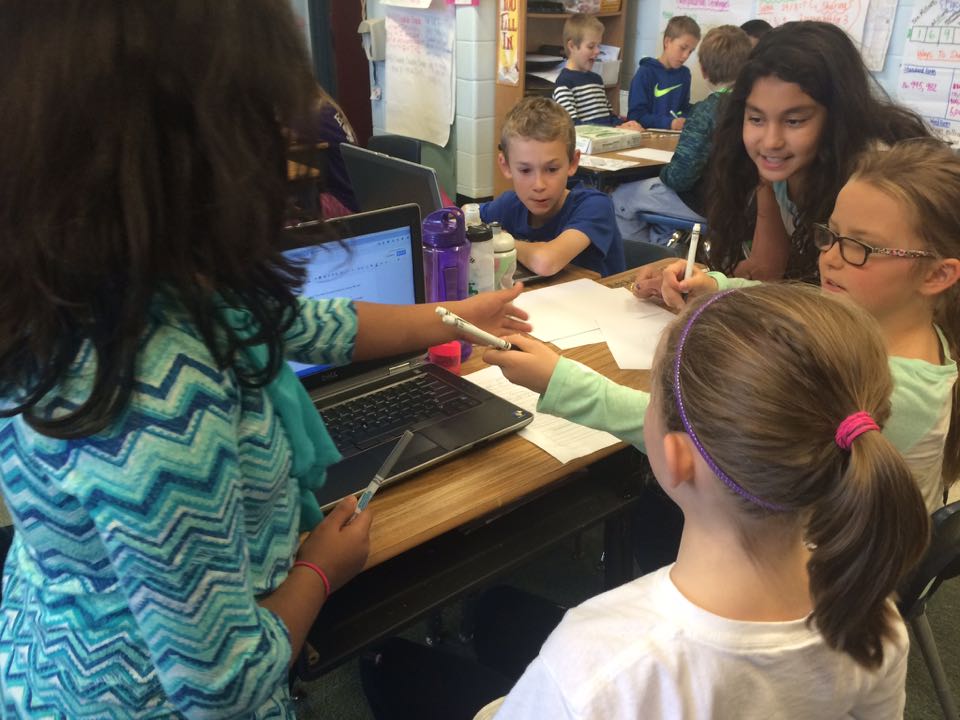
Researchers working together

In math students prepared for, completed and reflected on an assessment of their growth during Unit 2. The reflection style that we are participating in this year gives students the opportunity to set goals after a unit pre-assessment and then reflect on those goals and re-evaluate them after the post-assessment. We are seeing tremendous growth in math and attribute part of this to our reflection process. Ask your student what his or her goals are! We will begin Unit 3 on Monday after break with those in mind.

You can see on the walls of our classrooms that we’ve been working in Number Corner on elapsed time and liquid measurement. These tasks are designed to introduce students to concepts which will appear in later math units throughout the year. This month we saw a different time on an analog clock daily, and considered how much time passed since the day before and since November 1st. Our clever mathematicians stretched their brains to consider the 24 hour day when it came to predicting what the clock would show in the coming days. We also watched daily as our Number Corner helpers filled cups that filled up quarts, and took those quarts to fill a gallon. These conversions and comparisons between measures were meaningful for students to understand, especially to see the visual in front of them, and especially for those who enjoy Mrs. Datillio’s cooking workshops! :)

This week we enjoyed a puppet show presentation on students with differences. Our students learned seven steps to being a friend to someone who is different, including using their name to get their attention, speaking in small sentences, using friendly words, giving options, and asking questions to learn about the new friend. We expect that our students treat all friends with respect and care, and are thankful to the people who came to share this presentation with us.

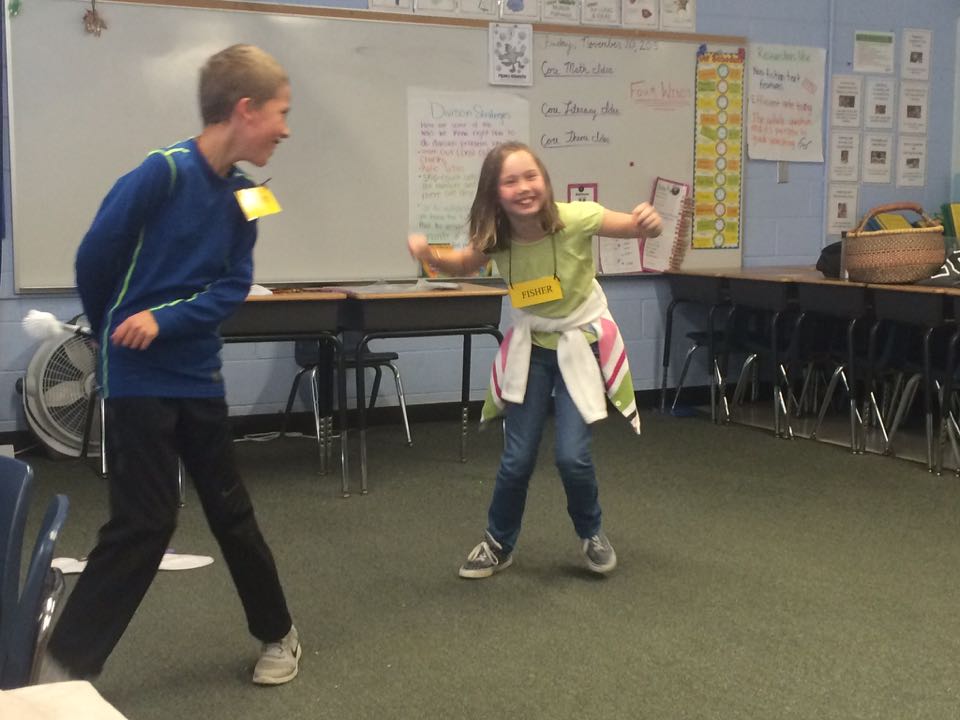
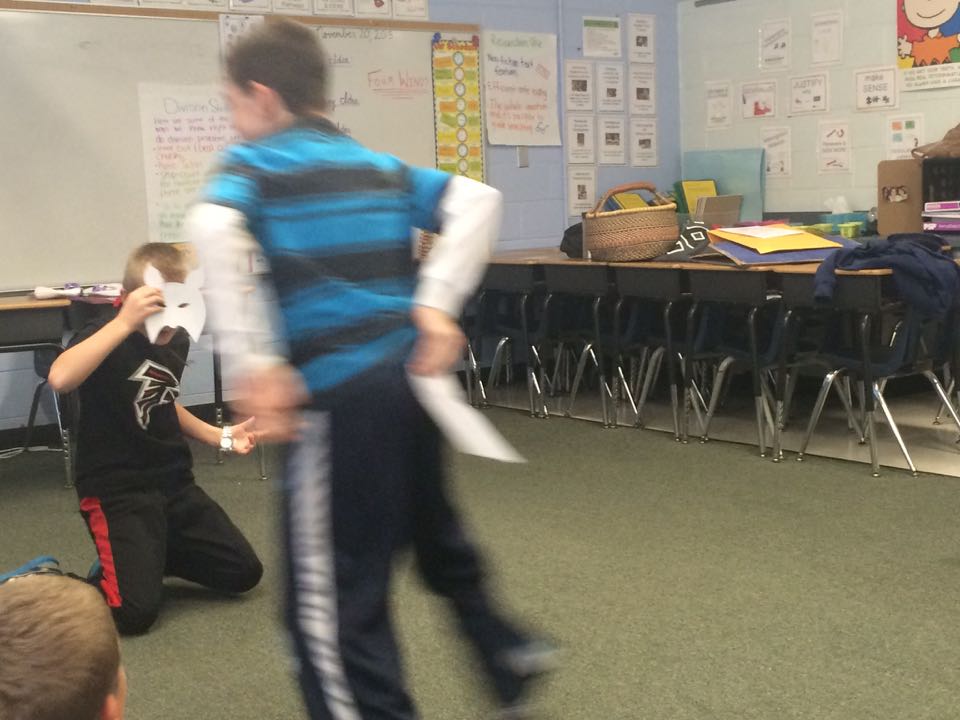
We also had a Four Winds session this week on predator and prey. Students loved to practice with a tag game where some needed to be prey and get food and get back to their safe space, and some were predators hoping to tag the prey. We noticed that the fewer predators we had, the easier it was for the prey to get their food and get back to safety. Students also acted out some adaptations and strategies that animals have to keep them safe from predators. In all, this showed students the delicate balance of predator and prey and how each species keeps themselves safe, demonstrating the impact that nature has. 12272750_10205677239110245_1556589946_n.jpg

Prey trying to escape the predators

Adaptations and strategies of prey


To close our week, in our “Mornings with Mosaic” team meeting this past Friday we asked a few students to share what they are thankful for as we go into the Thanksgiving break. Here are a some of their responses:

“I am thankful for everyone in this room and that we were put on Mosaic.”

“I am thankful for learning and literacy.”

“I am thankful for my family and for food.”

“I am thankful for my teachers.”

We absolutely are thankful for each student, parent and teacher that makes Mosaic such a wonderful place to be and to learn. Ms. Cota and I will be in our classrooms for one more week after the break, and will love to return to visit in the future. This has been an incredible learning experience, made all the better by interacting with such engaged and kind learners. Thank you for sharing your minds and your work with us these past few months! We are thankful for you.

Have a restful, rejuvenating break. See you on November 30th!
Ms.M & Ms. Cota

Thursday, November 19, 2015

Vermont Natives

This week in theme, our students began learning about the first people to live in Vermont, the Abenaki tribe. We learned about how they lived using some of our literacy strategies for vocabulary and note-taking. Coming into this next week, students will be assigned a research topic and a specific research question to answer. All of this work will be compiled to create one book per each class and will fill the Abenaki style books students have been working on in art class. We are very excited to see students working on their research and witnessing all of their hard work from literacy, theme and art come together!


We concluded our reading and book clubs about Because of Winn Dixie this week. Ending the book together was sweet and sad, just like how the main character Opal feels when she tastes the Littmus Lozenge. Students worked diligently to describe and analyze one character from the text and this past week we saw engaged learners writing meaningful pieces about their character. The book lends itself to many connections and our students have certainly been “brain in” in making these connections.

In math this week we moved into looking at division and had a math forum on division strategies. Four mathematicians shared their thinking and strategies and our class responded respectfully and thoughtfully by listening to understand, asking genuine questions and seeing multiple pathways to solving problems. Students were able to use this time to learn authentically from each other and to see a variety of strategies that all helped us to solve story problems - and especially to look at remainders and how much the context of the problem matters! We spent time this week talking especially about how what the problem is asking for and what the problem is talking about matters greatly when we solve problems. We know we can split a pizza, but we would never split a person! :)

This coming week we will be wrapping up, studying and then taking our Unit 2 Math assessment on Wednesday. We are also starting to wrap up our November Calendar Grid and Collector in Number Corner because students will not be in school during the week of Thanksgiving and we want to learn and observe all that we can about these two classroom tools during the month!

On Tuesday, we will be attending a Friend 2 Friend puppet show at WCS addressing the Demystification of Autism. We are looking forward to this engaging show teaching us about diverse learners and inclusion. Parents are welcome to attend. We will be in the “dining room” from 9:30-10:30 A.M. This Friday, we will also be joined by parent volunteers for our November session of Four Winds from 10:20 - 11:40 A.M. So far this year, we have learned about spiders and trees and how structure and function relates to the natural sciences. Students look forward to these fun and interesting sessions each month!

This week, Miss Ashley Cota and Miss Sunny Masison (Miss M) will be “taking over” the classrooms and all responsibilities for Mrs. Parker and Mrs. Eaton. Please copy acota@cssu.org on any correspondence for Mrs. Parker and smasison@cssu.org on any correspondence for Mrs. Eaton. We are happy, excited and grateful for this opportunity to learn from such talented cooperating teachers and to experience our first week solo-teaching in such a supportive environment with such S.M.A.R.T. students!

Be well,
Sunny & Ashley